Healthcare Lead Qualification: A 5-Step Modern Process
Struggling with low-quality patient leads? Learn our 5-step healthcare lead qualification process to stop wasting time and book more qualified.

Share This Article
Table of Contents
Why Standard Lead Qualification Fails in Healthcare
Traditional lead qualification, borrowed from B2B sales, is a poor fit for the patient journey. Frameworks like BANT (Budget, Authority, Need, Timing) fail because they don’t account for the unique dynamics of healthcare. A patient's "budget" is their insurance coverage or ability to pay, not a negotiable line item. The "authority" is the patient themselves, seeking care for their own body. "Need" is a medical necessity, not a business want, and "timing" is driven by clinical urgency, not a purchasing cycle.
Applying these sales-centric models leads to awkward, impersonal conversations. Staff may ask irrelevant questions while missing the critical ones, like insurance compatibility or the specific service required. This misalignment creates friction from the very first interaction. Instead of building trust, it makes the patient feel like a sales prospect, not a person seeking help. A modern patient lead qualification process must be built on empathy and clinical relevance, not outdated sales tactics.
The Problem with Sales-Based Frameworks
Sales frameworks are designed to identify purchase intent, but healthcare inquiries are about care intent. Asking a patient about their "budget" is insensitive; the real question is about their insurance plan and coverage. Similarly, gauging "authority" is pointless when the caller is the one experiencing symptoms. These frameworks force a transactional lens onto a deeply personal and often urgent situation, damaging the patient experience before it even begins.
Patient Urgency vs. Buyer Intent
A potential customer for software can wait a week for a demo. A patient with acute pain cannot. Healthcare lead qualification must prioritize clinical urgency above all else. A low-intent "buyer" might be a patient doing early research for an elective procedure, while a high-urgency patient needs an appointment today. A system that can't differentiate between these scenarios will inevitably fail the patients who need it most, leading to delayed care.
Navigating Insurance and Medical Necessity
Unlike a simple product purchase, healthcare services are gated by complex factors like insurance acceptance, network status, and physician referrals. Qualifying a medical lead means confirming these practical details upfront. A patient may be highly motivated, but if your clinic doesn't accept their insurance, they aren’t a qualified lead. A robust qualifying medical leads process screens for these non-negotiables first, saving time for both the patient and your staff.
The High Cost of Slow or Inaccurate Patient Lead Follow-Up
In the competitive healthcare marketplace, speed and accuracy are paramount. When a potential patient reaches out, they are often at a vulnerable and motivated point in their journey. A slow or fumbled response doesn't just risk losing a single appointment; it creates cascading negative effects that impact your marketing ROI, staff morale, and overall revenue cycle management. Every minute you wait, the chances of that patient calling a competitor or abandoning their search increase dramatically.
Failing to properly qualify inquiries means your highly-trained administrative staff spends their valuable time on calls that go nowhere—fielding questions about the wrong insurance, services you don't offer, or from people just seeking medical advice. This isn't just inefficient; it's a direct drain on resources. The cost isn't just measured in wasted payroll, but in the opportunity cost of what that staff member could have been doing: assisting patients in the office, managing schedules, or handling complex billing issues.
Wasted Marketing Spend and Inflated CPL
Many clinics invest heavily in Google Ads for patient acquisition, carefully managing bids and ad copy to achieve a target cost per lead (CPL). However, if 50% of those leads are unqualified, your effective CPL has just doubled. Inaccurate follow-up turns your marketing budget into a sunk cost. By not having a system to instantly filter inquiries, you are paying to generate calls that clog your phone lines and produce zero revenue, undermining your entire marketing effort.
Administrative Burnout and Inefficiency
Your front desk or patient intake team are the heroes of your practice, but they have a finite capacity. When they are forced to manually screen every single incoming call, text, and web form, they quickly become overwhelmed. This repetitive, low-value work leads to burnout and high turnover. It also pulls them away from higher-impact tasks, like providing excellent service to existing patients and managing complex appointment scheduling, which directly impacts patient retention and satisfaction.
Delayed Care and Negative Patient Experiences
The most significant cost is to the patient. When a genuinely interested patient with an urgent need can't get through because the lines are tied up with unqualified inquiries, they suffer. This delay can impact their health outcome and creates a deeply negative first impression of your practice. In the digital age, that poor experience often turns into a negative online review, damaging your reputation and deterring other potential patients from reaching out.
A 5-Step Modern Healthcare Lead Qualification Process
To effectively manage patient inquiries, you need a structured process that is fast, empathetic, and clinically relevant. This five-step framework moves beyond simple call answering to create a streamlined patient intake system. It ensures that every potential patient is handled correctly, their needs are understood, and your team’s time is focused only on qualified individuals ready for the next step. This approach helps improve healthcare lead quality and lays the foundation for a positive patient journey from the very first touchpoint.
Step 1: Capture & Respond Instantly
Speed is non-negotiable. The moment a potential patient fills out a form or calls from an ad, an immediate response is critical. A delay of just five minutes can cause them to contact a competitor. The goal of this first step is simple acknowledgment and engagement. An automated text, email, or an immediate call-back confirms you've received their inquiry and assures them that help is on the way, preventing them from continuing their search elsewhere.
Step 2: Verify Core Information
Once you've made contact, the next step is to confirm the basics. This includes verifying the patient's name, a reliable callback number, and the primary reason for their inquiry. This initial data collection is foundational. It ensures you have accurate information in your system and provides the initial context needed for the subsequent screening steps. This should be a quick and simple exchange to gather essential data without overwhelming the caller.
Step 3: Screen for Key Qualifiers
This is the core of qualification. Here, you ask the critical questions that determine if the patient is a good fit for your practice. These questions form the basis of a healthcare lead scoring model and typically include:
- Service/Specialty: What specific treatment or doctor are they looking for?
- Insurance: What is their insurance provider and plan?
- New/Existing Patient: Have they visited your practice before? This step efficiently filters out inquiries that don't match your services or accepted payers.
Step 4: Assess Intent & Urgency
Not every qualified lead is ready to book an appointment immediately. The next step is to understand their intent. Are they in pain and need to be seen today, or are they researching an elective procedure for the future? By asking simple questions like, "How soon were you hoping to be seen?" you can segment high-intent patients who are ready for appointment booking from lower-intent leads who may require more information or lead nurturing.
Step 5: Route Appropriately
Based on the information gathered, the final step is to take the correct action.
- High-Intent, Qualified: Transfer immediately to the scheduling team to book an appointment.
- Low-Intent, Qualified: Add to a lead nurturing workflow to receive educational emails or schedule a future follow-up call.
- Unqualified: Politely provide a referral or information on a more appropriate provider, ending the interaction gracefully. This ensures every inquiry is routed efficiently, maximizing staff time and patient satisfaction.
Challenge: Qualifying Leads at Scale and After Hours
Even with a perfect manual process, human limitations create significant bottlenecks. A successful marketing campaign doesn't generate a neat, orderly trickle of leads; it produces a flood. When your Google Ads for patient acquisition are performing well, your front desk can be inundated with dozens or even hundreds of calls in a single day. Staff can only handle one call at a time, meaning many potential patients are sent to voicemail, where they are unlikely to wait.
This problem is compounded by the reality that patients don't limit their healthcare searches to business hours. A person experiencing a toothache at 9 PM on a Friday will start their search then and there. If your office is closed, that lead goes unanswered until Monday morning. By then, they have likely found another clinic with a 24/7 answering service or online booking. Without a system to manage inquiries around the clock, you are forfeiting a significant portion of your most motivated leads.
The Inbound Call Volume Dilemma
High call volume is a good problem to have, but it breaks manual systems. During peak hours, staff are forced to rush through calls, leading to errors in data entry and a poor patient experience. Callers endure long hold times, and many will simply hang up. This inability to scale means that your capacity to grow is capped by the number of people you have available to answer the phone at any given moment.
The "After-Hours" Black Hole for Leads
The 9-to-5 workday is a relic when it comes to patient acquisition. Leads generated from digital ads come in 24/7. Any inquiry that arrives after your staff has gone home enters a "black hole" of unresponsiveness. This delay gives motivated patients ample time to find a competitor who can engage with them instantly, effectively wasting the marketing spend that generated the lead in the first place.
Solution: How AI Voice Agents Instantly Qualify Leads 24/7
The solution to the challenges of scale and availability is technology. Specifically, AI-powered voice agents can execute a perfect patient lead qualification process instantly, 24/7, without human intervention. When a potential patient calls or fills out a web form, the AI agent can initiate an immediate, conversational phone call. It engages the lead in natural language, asking the precise screening questions you've defined in your qualification workflow.
This technology for automated lead follow-up in healthcare acts as a digital front desk that never sleeps and has unlimited capacity. It can handle one call or one thousand simultaneous calls with the same speed and accuracy. The voice agent follows the script perfectly every time, screening for insurance, desired service, and urgency. Once qualified, it can transfer the call directly to your scheduling staff, send the lead's information to your CRM, or even write directly into your practice management system for a follow-up. This frees your human team to focus exclusively on high-value conversations with patients who are ready for care.
Immediate, Consistent Engagement for Every Inquiry
An AI voice agent eliminates the "after-hours black hole." Whether a lead comes in at 3 PM or 3 AM, it receives the exact same immediate, professional response. This consistency builds trust and ensures no potential patient ever feels ignored. This system for automating appointment setting from Google Ads and other sources guarantees that you capitalize on peak patient intent, no matter when it occurs.
Seamlessly Integrating with Your Marketing Channels
Modern AI solutions offer deep CRM integration and can connect directly to your marketing platforms. For example, a voice agent can be triggered the moment a lead is generated from a Google Ads call extension or lead form. This creates a closed-loop system where marketing spend translates directly into qualified conversations, providing clear data on campaign performance and improving your overall conversion rate optimization.
Case Study: How a Clinic Cut Unqualified Calls by 60%
A multi-location dermatology practice was investing heavily in pay-per-click (PPC) ads to attract patients for specialized cosmetic procedures. However, their front desk staff reported that the majority of their time was spent on the phone with callers who were either a poor fit or not ready to book. Many callers had insurance the practice didn't accept, were looking for general dermatology services they didn't prioritize, or were simply "price shopping" with no real intent.
To solve this, they implemented an AI Voice Agent as the first point of contact for all leads generated from their PPC campaigns. The agent was programmed with a simple script:
- Confirm the specific cosmetic procedure the caller was interested in.
- Ask if they were a new or existing patient.
- State that these procedures were self-pay and ask if they were comfortable with that.
Only callers who confirmed interest in a specific service and acknowledged the self-pay requirement were transferred to the live front desk team. The results were immediate. The practice saw a 60% reduction in the volume of unqualified calls being handled by their staff. This freed up the administrative team to provide better service to existing patients and focus on converting the highly-qualified, pre-vetted leads, significantly improving their conversion rate optimization.
Key Features: What to Look for in a Qualification Tool
When evaluating software for qualifying medical practice leads, it’s crucial to look beyond the basic features. The right tool should not only automate tasks but also integrate seamlessly and securely into your existing healthcare environment. A modern qualification platform should act as a reliable, intelligent extension of your front office team.
Here are the key features to look for in a modern lead qualification solution:
- 100% HIPAA Compliance: This is non-negotiable. The vendor must be willing to sign a Business Associate Agreement (BAA) to ensure all patient data is handled securely.
- Customizable Scripts: Your practice is unique. The tool must allow you to create custom conversational scripts and qualification questions tailored to your specific services, locations, and insurance policies.
- Seamless CRM Integration: The system should automatically push lead data, call dispositions, and transcripts into your CRM or Patient Management System. This eliminates manual data entry and provides a complete view of the patient journey.
- 24/7 Availability: The primary benefit of automation is its ability to work around the clock. Ensure the tool can engage leads instantly, regardless of when they inquire.
- Intelligent Call Routing: The platform should be able to route qualified leads to the right person or department based on the caller's answers, such as connecting them to a specific clinic location or a billing specialist.
- Real-Time Analytics and Call Tracking: To optimize your marketing, you need data. The tool should provide clear analytics on lead volume, qualification rates, and outcomes, connecting them back to the original marketing source.
Ensuring Your Process is 100% HIPAA Compliant
In healthcare, data security is not an option—it's the law. Any process or technology that handles Protected Health Information (PHI) must be fully compliant with the Health Insurance Portability and Accountability Act (HIPAA). When automating your lead qualification, this becomes a critical consideration. PHI can include a patient's name, phone number, insurance information, or their reason for seeking care.
A HIPAA compliant lead management strategy requires that every vendor you work with understands and adheres to these strict privacy and security rules. This is especially true for any software that communicates with patients, records conversations, or stores their data. Before implementing any tool, you must verify that the provider has the necessary safeguards in place, including data encryption, access controls, and audit logs, to protect sensitive patient information from unauthorized access.
What is a Business Associate Agreement (BAA)?
A Business Associate Agreement (BAA) is a legally binding contract between a healthcare provider (the Covered Entity) and a vendor (the Business Associate) that handles PHI on their behalf. This contract requires the vendor to maintain the same high standards of data protection as the provider. You must have a signed BAA in place with any technology partner, including a lead qualification software provider, before allowing them to handle any patient data.
Protecting Patient Data During Intake
Compliance extends beyond technology to your process. Ensure that qualification scripts only ask for the minimum necessary information to qualify the lead. For instance, you can ask which insurance provider a patient has without asking for their policy number. All data, including call recordings or transcripts, should be encrypted both in transit and at rest. Choosing a vendor that specializes in healthcare ensures these protocols are already built into their platform.
Next Steps: How to Automate Your Lead Qualification
Transitioning from a manual, inefficient lead qualification process to a streamlined, automated system can transform your patient acquisition efforts. By implementing the right technology, you can connect with more of the right patients, reduce administrative waste, and provide a superior experience from the very first touchpoint. The key is to take a measured, strategic approach to implementation.
Start by mapping your current patient intake process. Identify the biggest bottlenecks and the most common reasons for disqualification. This audit will help you define the perfect script and logic for an automated system. Focus on creating a clear set of rules for what constitutes a qualified lead for your specific practice. Once you have this foundation, you can begin exploring technology designed to solve this exact problem. A pilot program focused on a single, high-volume marketing channel, like automating appointment setting from Google Ads, is an excellent way to prove the concept and measure the ROI before a full-scale rollout.
Related Case Studies
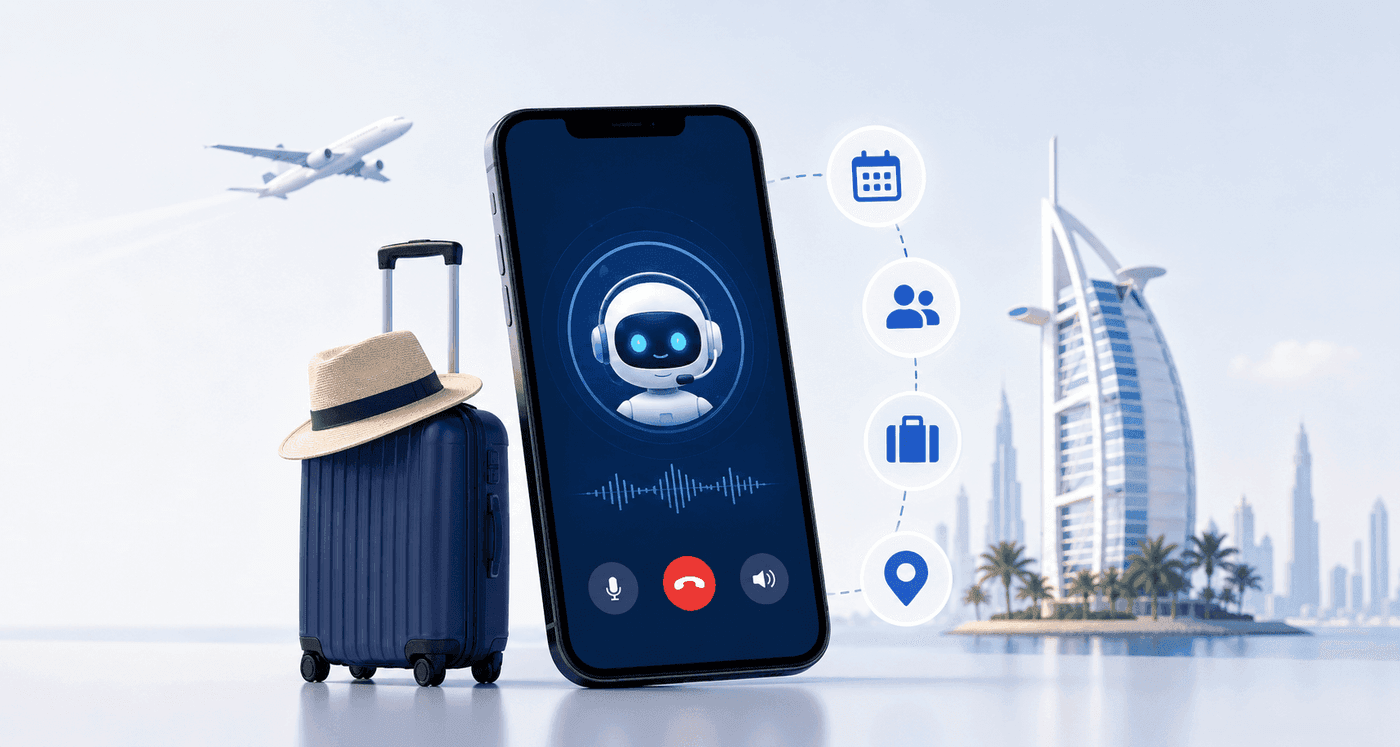
How a Premium Travel Company Uses an AI Voice Agent to Qualify Leads Before Expert Engagement
How a Dubai luxury travel company deployed an AI voice agent to capture requirements, classify intent, and route qualified leads to experts.

How an Executive Education Provider Is Using AI Voice Agents to Qualify 10,000 Leads a Month
How an executive education provider used AI voice agents to qualify 10,000 leads a month, automate screening, and boost admissions.