Automate Edtech Lead Qualification with AI & Zoho
For Edtech pre-sales teams. Learn to automate student lead qualification using an AI chatbot with Zoho to improve response times & qualify prospects.

Share This Article
Table of Contents
The Problem: Why Manual Qualification Fails in Edtech
Manual lead qualification in the Edtech sector is fundamentally broken. Unlike other industries, the definition of a "lead" is incredibly broad, ranging from a curious teacher to a district superintendent with the authority to sign a six-figure deal. Relying on manual processes creates friction, slows down your sales cycle, and ultimately costs you revenue. Your team spends more time sorting and chasing than they do consulting and closing with high-value prospects.
This reactive approach not only burns out your pre-sales team but also delivers a poor experience for potential customers. High-intent leads who are ready to talk are left waiting, while your team wastes cycles on inquiries that will never convert. This inefficiency directly impacts the bottom line and hinders your ability to scale.
High Volume, Low Signal
The Edtech space is noisy. For every one serious inquiry from a school district, you might get fifty from individual teachers exploring tools for their classroom, students doing research, or parents looking for supplemental resources. Manually vetting each form submission or email is an unsustainable task. This high-volume, low-signal environment means your most valuable leads—the ones with budget and authority—are often buried in the queue, waiting for a response while their buying intent cools.
The Nuance of Edtech Buying Cycles
A generic B2B qualification checklist doesn't work for education. The decision-making unit (DMU) is complex and varies wildly. Is the inquiry from a single teacher (an influencer), a department head (a champion), or a chief technology officer (an economic buyer)? Each requires a different conversation. Manual qualification struggles to capture this nuance, treating a district-wide inquiry with the same initial process as a single-school pilot request. This lack of context leads to generic demos and wasted time for everyone.
The Cost of Delay
In a competitive market, speed is everything. When a high-potential prospect requests a demo, their interest is at its peak. Every hour you spend manually qualifying them is an opportunity for a competitor to engage them first. Slow response times signal inefficiency and can make a poor first impression. Automating the initial qualification steps is crucial for improving lead response time, ensuring your pre-sales experts connect with the hottest leads in minutes, not days.
A Framework for Intelligent Lead Qualification
To fix the leaky pipeline, you need a systematic, intelligent framework that goes beyond simple contact forms. This approach is built on three core pillars: clearly defining who you want to talk to, creating a system to score them automatically, and establishing clear rules for when a lead is truly ready for a pre-sales conversation. This strategic foundation is essential for any successful edtech pre-sales automation initiative, ensuring technology serves a well-defined process.
By implementing this framework, you transform your qualification process from a subjective, manual chore into an objective, data-driven machine. This allows your team to focus exclusively on opportunities that align with your business goals.
Step 1: Define Your Ideal Customer Profile (ICP)
Your Ideal Customer Profile (ICP) for Edtech must be specific and institutional. Go beyond user personas and define the characteristics of the organizations you serve best. Consider factors like:
- Institution Type: Public school district, private academy, charter network, or higher education?
- Size: Student enrollment numbers or number of schools.
- Budget: Title I funding status, per-pupil spending, or access to specific grants.
- Existing Tech Stack: Are they using a competitor? Do they have a compatible SIS or LMS?
A clear ICP is the blueprint for your entire automated qualification system.
Step 2: Implement a Tiered Scoring Model
Lead scoring assigns points to prospects based on how closely they match your ICP and their expressed interest. This turns qualification into a simple, data-driven process. For example, you can assign values based on role, need, and institution size. An AI-powered system can use chatbot lead scoring for schools to ask targeted questions and apply these rules in real-time during the initial conversation. This ensures only leads who reach a certain point threshold are escalated to your team.
Step 3: Differentiate MQL vs. SQL for Edtech
Clearly defining the handover point between marketing and sales is critical.
- Marketing Qualified Lead (MQL): An individual who shows interest but isn't yet confirmed to be a decision-maker with a qualified need. (e.g., A teacher downloads a lesson plan).
- Sales Qualified Lead (SQL): A lead that has been vetted against your ICP and shows clear buying intent. (e.g., A District IT Director requests a demo for five middle schools and confirms they have a budget).
Your automation should nurture MQLs and instantly route SQLs to the pre-sales team for immediate engagement.
The Tech Stack: AI Chatbots and CRM Integration
The right technology is what brings your intelligent qualification framework to life. The goal is to create a seamless admissions workflow or sales pipeline where data flows effortlessly from initial contact to a scheduled demo. The ideal stack combines a frontline conversational tool with a robust backend system of record. For most Edtech organizations, this means pairing a smart, AI-driven chatbot with a powerful CRM like Zoho.
This combination acts as an automated gatekeeper and data-enricher, ensuring your pre-sales team receives a clean, well-qualified, and context-rich list of prospects. It’s the engine that powers an efficient and scalable student inquiry management system.
Why an AI Chatbot is Your Frontline Qualifier
An AI chatbot is your 24/7 pre-sales development representative. It can instantly engage every visitor on your website, asking the crucial qualification questions you’ve defined in your framework. Unlike a static form, a chatbot provides an interactive, conversational experience that can guide prospects, answer common questions, and capture key data points in real-time. This immediate engagement is key to improving lead response time in higher education and K-12, preventing high-intent leads from dropping off.
The Power of Zoho CRM Integration
A standalone chatbot creates another data silo. The real power comes from deep CRM integration. An AI chatbot designed to work with Zoho can instantly create or update lead records in your Zoho CRM with the information it gathers. This means when a qualified lead is identified, a complete profile—including conversation transcripts, role, institution size, and specific needs—is already waiting for your pre-sales rep. This eliminates manual data entry and provides rich context for their first call.
Conversational AI vs. Basic Chatbots
Not all chatbots are created equal. Basic, rule-based bots rely on rigid scripts and buttons, which can feel clunky and frustrating. Conversational AI for education, on the other hand, uses Natural Language Processing (NLP) to understand the user's intent, even if they type something unexpected. This allows for a more natural, human-like dialogue, improving the applicant experience and gathering more nuanced qualification data than a simple form or button-based bot ever could.
Step-by-Step: Building Your Automated Workflow
With the right framework and tech stack, you can now build your automated workflow. This is where theory becomes practice. The process involves designing a smart conversation, defining the rules for scoring, and automating the final handoff. This practical implementation is how to use AI to qualify student leads effectively, creating a system that works for you around the clock. By following these steps, you can reduce admissions team workload with automation and empower your pre-sales professionals to focus on what they do best: building relationships and closing deals.
Crafting Your Qualification Script
Your chatbot's script is its most important asset. Design questions that map directly to your ICP and lead scoring model. Move beyond basic contact information and dig into qualification criteria.
A good script might include questions like:
- "What is your role? (e.g., Teacher, Department Head, IT Director, Superintendent)"
- "Is this inquiry for a single classroom, a specific school, or the entire district?"
- "What learning management system (LMS) are you currently using?"
- "Are you working with a specific budget or timeline for this project?"
This line of questioning quickly separates an exploratory teacher from a serious district-level buyer.
Setting Up Lead Scoring Rules
Inside your automation tool, you will translate your scoring model into concrete rules. This is where the magic happens. A lead's score should update in real-time as the chatbot conversation progresses.
Here is a simplified example:
- Role: Superintendent (+25), IT Director (+20), Teacher (+5)
- Scope: District-wide (+20), Single School (+10), Classroom (+1)
- Timeline: This Quarter (+15), This Year (+10), Just Researching (+0)
Set a threshold (e.g., 40 points) that a lead must reach to be considered an SQL and automatically passed to the pre-sales team.
Automating the Handoff to Pre-Sales
The final step is to close the loop. Configure a trigger so that when a lead's score surpasses your SQL threshold, an action is automatically initiated in your Zoho CRM. This action could be:
- Creating a new deal in the "Qualified" stage.
- Assigning the lead to a specific pre-sales representative based on territory.
- Scheduling a task for the rep to follow up within the hour.
- Sending a real-time notification via Slack or email.
This ensures a seamless and immediate handoff, eliminating any chance of a qualified lead falling through the cracks.
Measuring Success and Optimizing Your System
Launching your automated qualification system is just the beginning. The true power of this approach lies in continuous measurement and optimization. By tracking the right metrics, you can prove the system's value, identify bottlenecks, and refine your process over time. This data-driven approach ensures your pre-sales engine becomes more efficient and effective each quarter, directly contributing to higher enrollment rates or sales targets.
An optimized system not only improves internal efficiency but also enhances the overall applicant experience or prospect journey, as your communication becomes faster and more relevant.
Key Metrics to Track
Focus on metrics that demonstrate efficiency and impact on the pipeline. Don't just count the number of leads; measure the quality and velocity. Key performance indicators (KPIs) to monitor include:
- Lead-to-SQL Conversion Rate: What percentage of incoming inquiries become sales-qualified?
- Average Lead Response Time: How quickly are SQLs contacted by a human? This should drop from days to minutes.
- Demo Completion Rate: Are the leads being passed to pre-sales actually showing up for demos?
- SQL-to-Opportunity Conversion Rate: How many qualified leads turn into real sales opportunities in your CRM?
Analyzing Conversation Logs for Insights
Your chatbot's conversation transcripts are a goldmine of voice-of-customer data. Regularly review them to understand the common questions, pain points, and language your prospects use. Are they frequently asking about a specific feature you don't highlight? Are they getting stuck on a particular qualification question? Use these insights to refine your chatbot scripts, improve your website copy, and better align your messaging with what your audience truly cares about.
Scaling Your Pre-Sales Efforts
An automated qualification system is built for scalability. As your institution or company grows and lead volume increases, you won't need to hire pre-sales staff at the same rate. The system handles the top-of-funnel sorting, ensuring that an increase in marketing-generated inquiries doesn't overwhelm your team. This allows you to grow efficiently, confident that your pre-sales experts are always spending their time on the highest-potential opportunities, driving revenue without proportionally increasing costs.
Related Case Studies

How an EdTech Founder Reactivated a Dormant Lead Database Using WhatsApp Automation and AI-Assisted Qualification
How an EdTech founder reactivated a dormant inquiry database and acquired customers in week one using WhatsApp outreach and AI qualification.
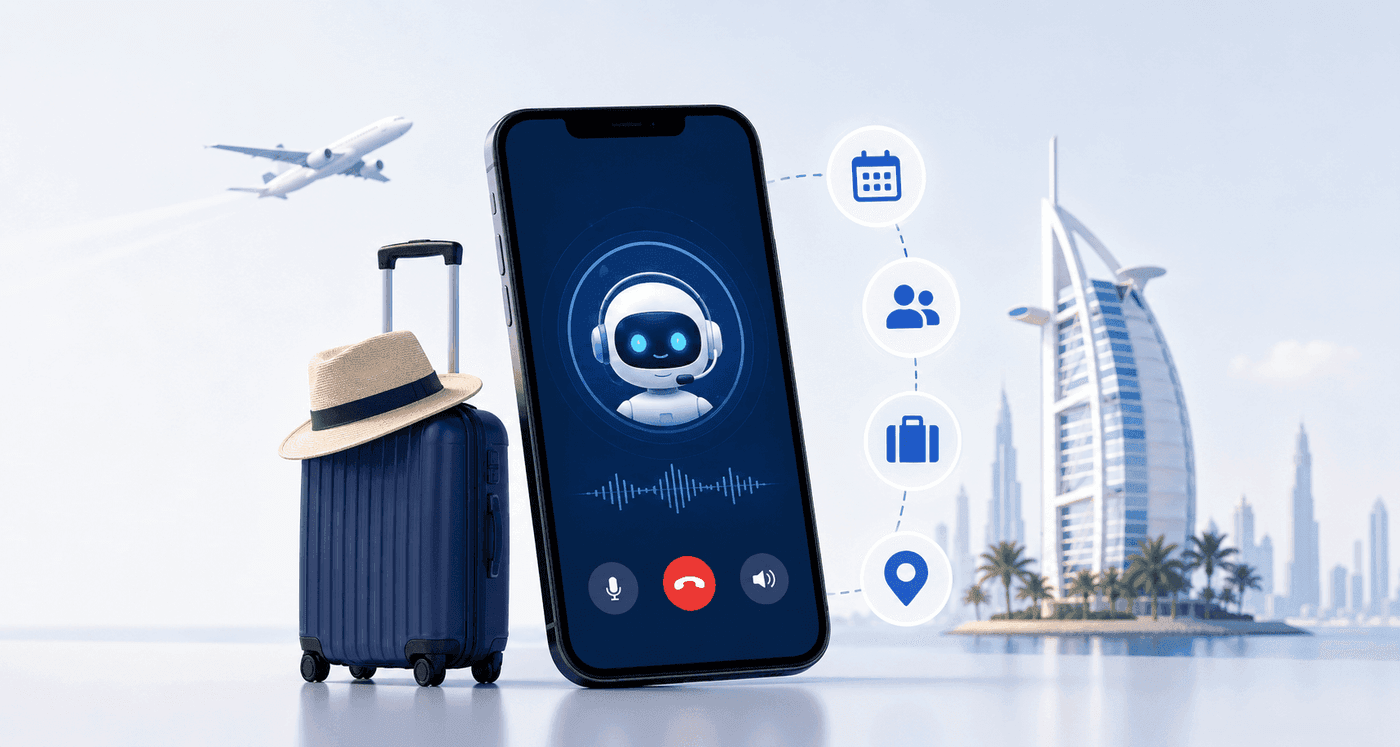
How a Premium Travel Company Uses an AI Voice Agent to Qualify Leads Before Expert Engagement
How a Dubai luxury travel company deployed an AI voice agent to capture requirements, classify intent, and route qualified leads to experts.
How an Executive Education Provider Is Using AI Voice Agents to Qualify 10,000 Leads a Month
How an executive education provider used AI voice agents to qualify 10,000 leads a month, automate screening, and boost admissions.