Kipps X OpenAI - Build a Human-Like Voice Agent
Use Kipps.AI with OpenAI voice to build a human-like AI voice agent. Configure speech-to-text and text-to-speech for natural, responsive conversations.

Introduction
Voice is quickly becoming the default interface for human-AI interaction — and the bar for what counts as acceptable keeps rising. A voice agent that merely "works" isn't enough anymore; customers expect a human-like voice agent that listens without interrupting oddly, responds without an awkward delay, and sounds like it actually understood what was said rather than pattern-matched a keyword. With Kipps.AI, integrating OpenAI Voice into your custom AI agent — whether it's a Chat Agent, a voice assistant, or a WhatsApp bot — is both seamless and powerful.
This post walks through what "human-like" actually means in a voice agent, why it matters for real business outcomes, exactly how to configure OpenAI Voice inside Kipps.AI, and what to evaluate before choosing a voice AI provider for a production deployment.
Why Human-Like Voice Interaction Matters
Every customer interaction carries an implicit test: does this business value my time? A voice agent that talks over the caller, misreads a straightforward question, or answers in a stilted, over-formal register fails that test in the first ten seconds — regardless of whether the underlying logic eventually gets the job done. People don't evaluate AI agents on accuracy alone; they evaluate them on how the interaction felt.
That's the gap a genuinely human-like voice agent closes. Adding voice capability introduces a natural, hands-free way to interact with technology — no typing, no navigating a menu tree, no waiting for a chat window to load. With OpenAI's advanced speech-to-text and text-to-speech models, a Kipps.AI agent can listen, understand, and respond with fluency that's close enough to a real conversation that callers stop thinking about the interface and start focusing on getting their question answered.
This matters most in the moments businesses can least afford to get wrong: a support call from a frustrated customer, a first-touch sales conversation, an appointment confirmation that needs to feel personal rather than transactional. Whether it's handling customer calls, powering smart assistants, or enhancing WhatsApp voice messages, human-like voice interaction brings an AI agent to life — making conversations feel intuitive and responsive rather than scripted.
There's also a retention effect that's easy to underestimate. Once a customer has a good experience with a human-like voice agent, they're far more willing to use that channel again — which means a well-built voice agent doesn't just resolve the current call, it changes how customers choose to reach the business next time.
What Makes a Voice Agent Feel Human
A human-like voice agent isn't one feature — it's several working together in real time:
- Accurate speech-to-text under real-world conditions: Background noise, accents, interruptions, and half-finished sentences are the norm on a real phone call, not the exception. OpenAI's speech models are built to handle that variability rather than requiring a quiet room and a clear, deliberate speaker.
- Context retention across a conversation: A human-like agent remembers what was said two exchanges ago, not just the current utterance — so a caller doesn't have to repeat their account number three times in one call.
- Natural response timing: Real conversation has a rhythm. Responding too fast feels jarring; responding too slow feels broken. Human-like voice agents are tuned to land in the natural gap a real person would leave.
- Tone and pacing control: The same agent should be able to sound brisk for a quick order confirmation and measured for a sensitive support issue — adjustable through voice speed and voice selection rather than a single fixed setting.
- Graceful handling of the unexpected: When a caller asks something off-script, a human-like agent should respond sensibly rather than looping back to a canned line — and know when to hand off to a human.
How to Get Started with OpenAI Voice on Kipps.AI
Follow these simple steps to enable OpenAI Voice for your agent:
Step 1
Login/Signup to your Kipps.AI account.
Step 2
Click on the Voice Agent option to create your own Voice Agent.

Step 3
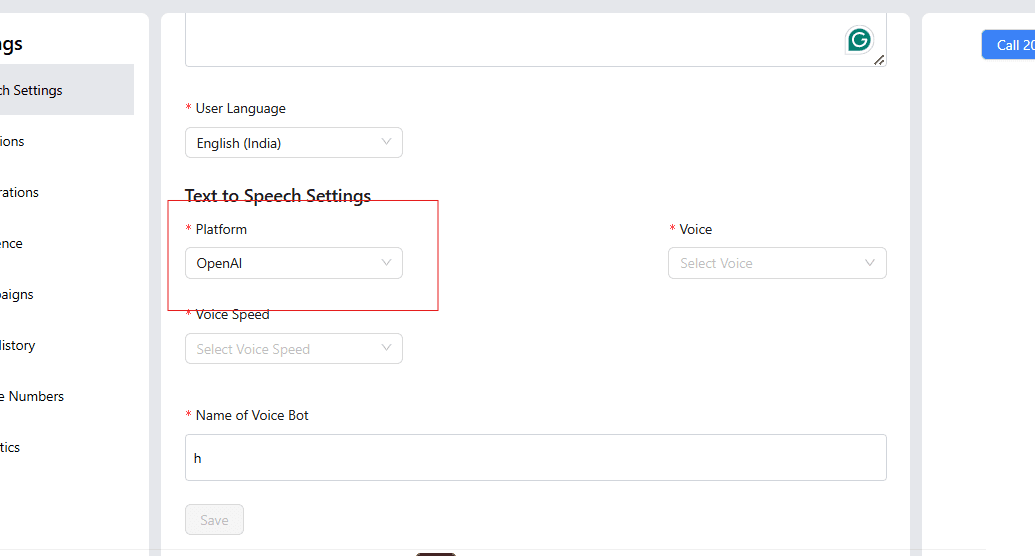
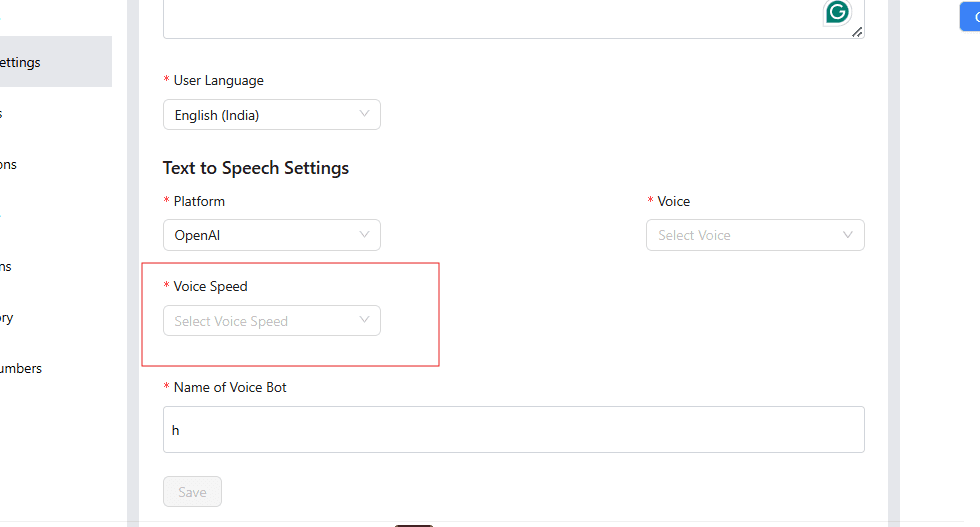
Scroll down the screen, then go to the Platform section and select OpenAI
Step 4
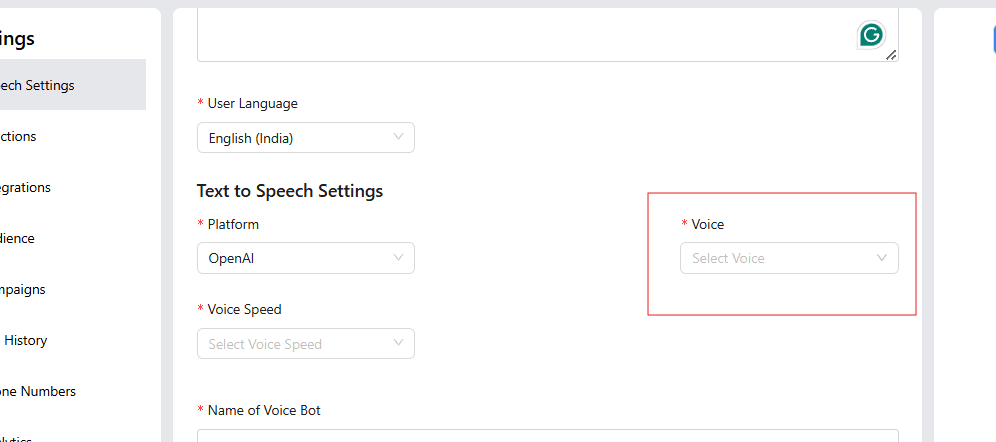
Choose the Voice Option and Select The Voice.
Step 5
Select your preferred Voice Speed.
Step 6
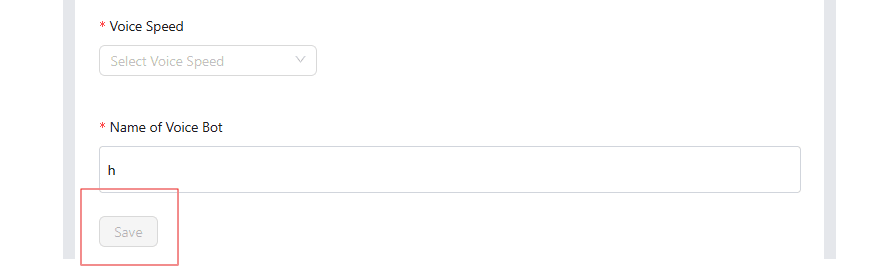
Click Save — and your Voice Agent is now ready to talk!
Human-Like Voice Agent vs. Basic Voice Bot vs. Human Agent
| Capability | Basic Voice Bot | Human-Like Voice Agent (OpenAI + Kipps.AI) | Human Agent |
|---|---|---|---|
| Understands natural, unscripted speech | Limited | Yes | Yes |
| Remembers earlier parts of the call | Rarely | Yes | Yes |
| Adjustable tone and speed | No | Yes | Variable |
| Handles accents and background noise | Poor | Strong | Depends on hearing/attention |
| Available 24/7 | Yes | Yes | No |
| Setup effort | Developer-heavy | No-code, minutes | Hiring and training cycle |
| Cost at scale | Low | Low | High (salary, attrition, shifts) |
The pattern is consistent across every voice AI decision: the goal isn't choosing between "automated" and "good" — it's getting both, which is exactly what a properly configured human-like voice agent delivers.
Use Cases
Here are some of the ways businesses use OpenAI Voice with Kipps.AI:
-
Customer Support: Automate phone support with voice agents that understand context and provide quick, accurate responses — without forcing callers to navigate a menu or repeat themselves.
-
Smart Devices: Enable conversational voice control in IoT devices or smart home assistants, where a stilted or slow response breaks the experience immediately.
-
WhatsApp Voice Agents: Handle voice messages, convert them to text, and reply with AI-powered intelligence and a natural-sounding voice response — useful in markets where voice notes are a default way of communicating.
-
Inbound Sales Qualification: A human-like voice agent can ask calibrated follow-up questions and pick up on hesitation or interest in a caller's tone, routing warm leads to a human closer faster.
-
Appointment Scheduling and Confirmation: Two-way voice conversations let customers reschedule or confirm in a single natural exchange, instead of navigating a rigid confirm/cancel prompt tree.
What to Look for in a Human-Like Voice Agent Platform
Before choosing a provider, check for these six things:
- Real speech-to-text accuracy, not demo-condition accuracy. Ask how the platform performs with background noise, accents, and interruptions — the actual conditions of a live phone call.
- Context retention across the full conversation, not just the last message. A human-like agent shouldn't need a caller to restate information already given.
- Configurable tone, voice, and speed so the same platform can support both a brisk transactional flow and a more measured support conversation.
- Model flexibility. Kipps.AI's OpenAI Voice integration is one option among several supported platforms — look for a provider that isn't locked into a single voice model, so you can switch as better models become available.
- No-code setup, so voice, persona, and flow changes don't require a developer sprint every time you want to adjust the script.
- A clear path to human escalation for the conversations that genuinely need a person — a human-like agent should recognize its own limits, not force every caller through the same automated flow.
Kipps.AI is built around all six of these from the ground up, with the OpenAI Voice configuration living in the same dashboard as your agent's logic, knowledge base, and CRM connections.
Frequently Asked Questions
It means the agent understands natural, unscripted speech, retains context across the conversation, responds with natural timing, and adjusts its tone appropriately — the combination that lets a caller focus on their issue instead of noticing they're talking to software.
No. The integration is configured entirely through the Kipps.AI dashboard — connecting the platform, choosing a voice, setting speed, and saving your agent, as shown in the steps above.
Yes. Voice and speed settings are adjustable at any time from the Platform section of your agent configuration, without needing to rebuild the agent from scratch.
A well-configured agent responds honestly rather than guessing, and escalates to a human when appropriate — ideally with full conversation context passed along so the caller doesn't have to repeat themselves.
No. Kipps.AI supports multiple voice platforms, including OpenAI and ElevenLabs, so you can choose the model and voice quality that best fits your use case and budget.
Conclusion
Integrating OpenAI Voice with Kipps.AI is straightforward — plug in your API key, configure your preferences, and launch. Whether you're building a Voice Agent, an assistant, or a voice-driven customer workflow, Kipps.AI makes it simple to bring a genuinely human-like AI experience to life, without a lengthy engineering project standing between you and your first live call.
Start transforming your customer experience with voice — book a free demo at kipps.ai/contact-sales or build your AI agent today on Kipps.AI.